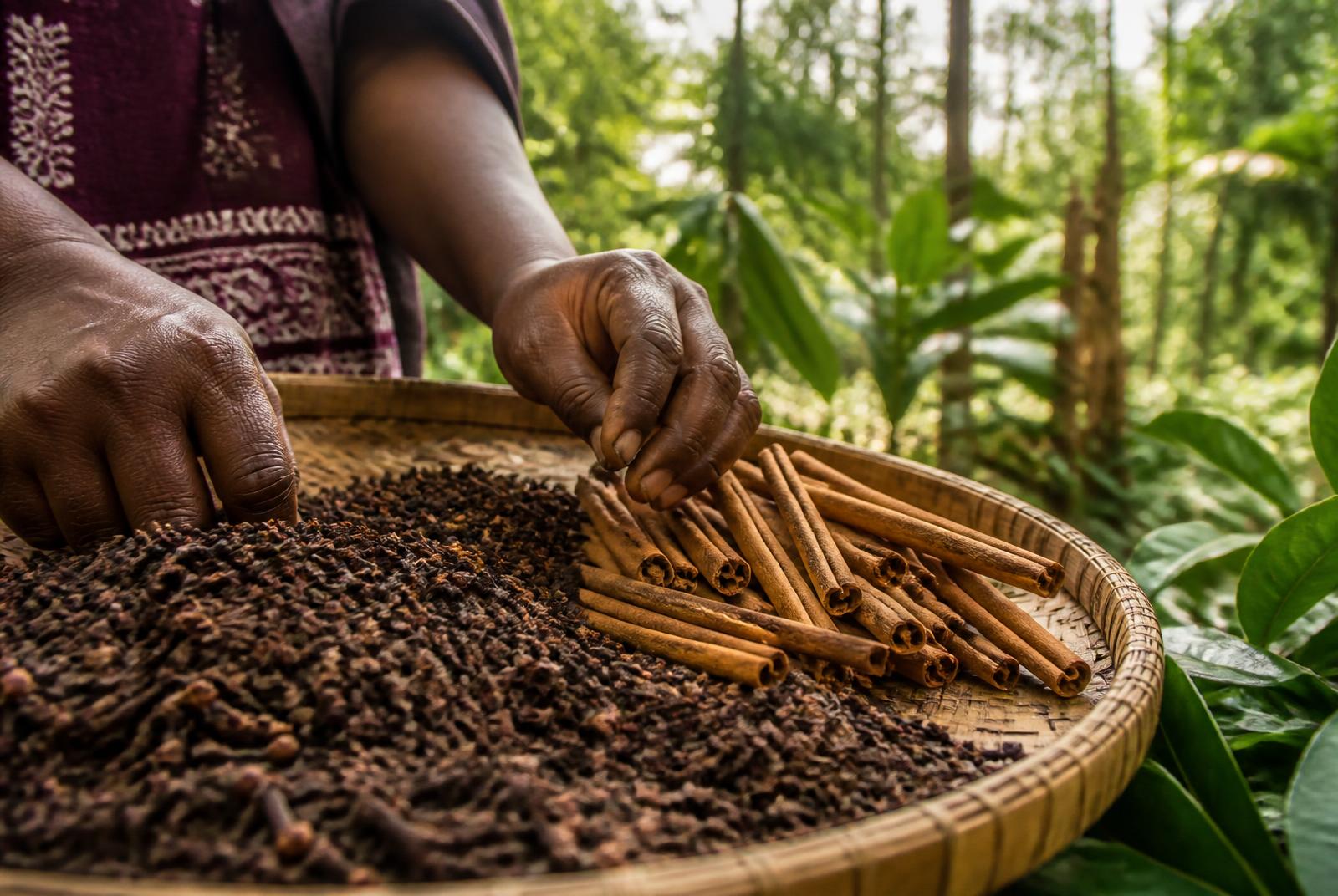
A clove is small enough to disappear between two fingers. Yet held close, it contains an entire geography: island humidity, Indian Ocean routes, cultivated land and the shadow of empire.
01
An Indian Ocean crossroads
Zanzibar’s spice reputation is rooted in centuries of exchange between East Africa, Arabia, India and the wider ocean world. Cloves, however, are not native to the island; their earlier home lies in the Maluku Islands of Indonesia.
Under Omani Sultan Seyyid Said in the nineteenth century, clove cultivation expanded rapidly. Zanzibar became a major producer and the scent of drying cloves entered the island’s global identity.
Provenance asks us to hold beauty and difficult history in the same frame.
02
The history beneath the romance
That prosperity was built substantially through enslaved labour on plantations. Any honest account of the ‘Spice Island’ must resist turning trade history into atmosphere while leaving its human cost outside the frame.
The end of legal slavery did not erase the structures created around land and power. Heritage becomes meaningful only when it includes what is difficult to inherit.
03
Spice as living knowledge
Today, cloves sit among cinnamon, cardamom, pepper, nutmeg and other crops that make Zanzibar’s cultivated landscape intensely aromatic. Harvesting, drying and sorting remain acts of judgement.
To encounter spice at origin is to move past the jar—to see a perennial tree, a season, and a network of hands and histories that flavour alone cannot explain.
Editorial note
This story draws on regional history and published research. It does not claim a named Rift & Root supplier relationship.
- Encyclopaedia of African History: Seyyid Said and Zanzibar
- University of Arizona History Journal: cloves and plantation expansion
- Historical accounts of Zanzibar and the Indian Ocean slave trade