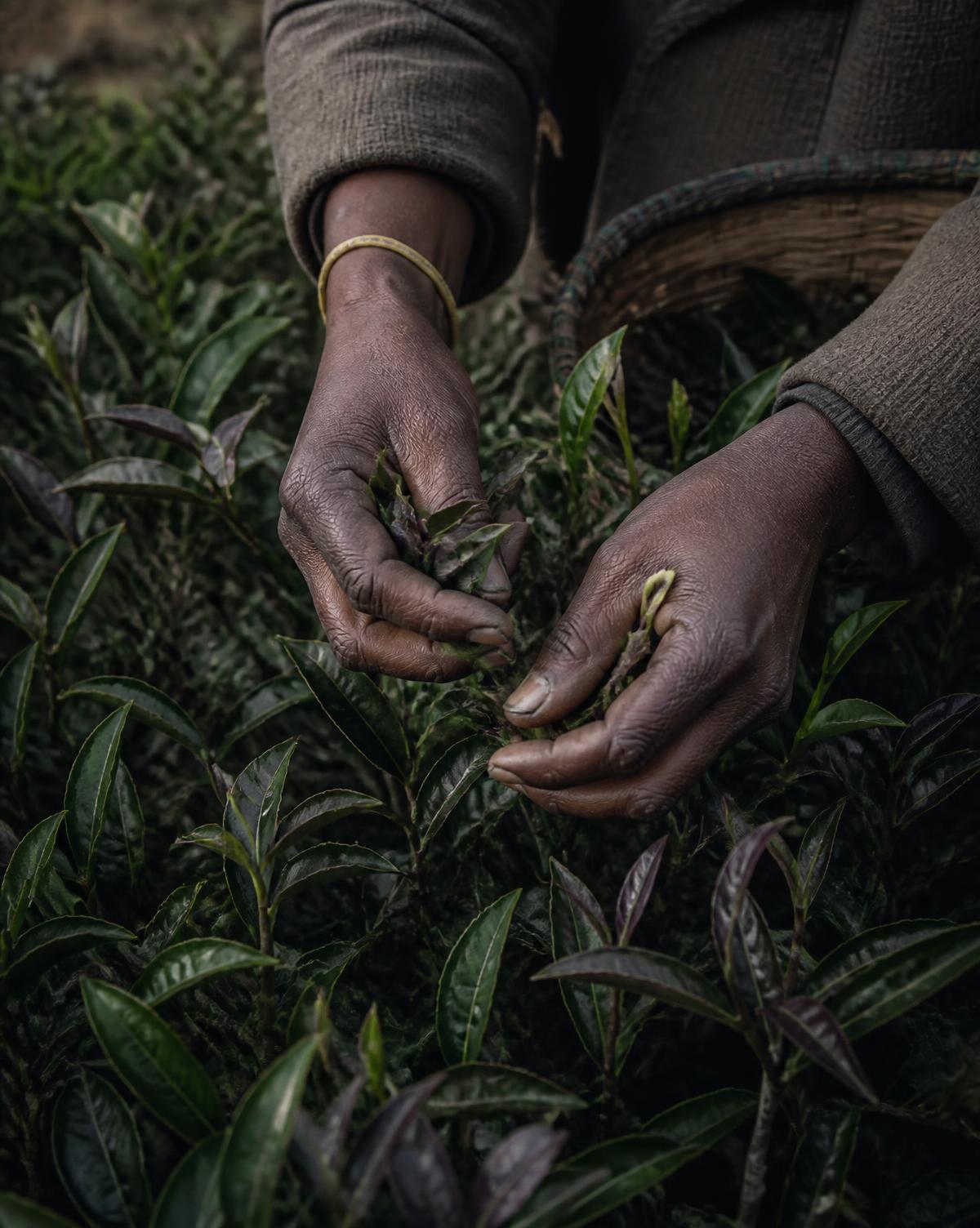
The day starts before the light does. In the highlands, plucking begins while the leaf is still cool, and the first decision of the harvest is made not by a machine but by a hand deciding what counts as ready.
01
A smallholder industry
Kenya is among the world's largest tea exporters, and an unusually large share of that production comes from smallholder farms rather than estates. Hundreds of thousands of growers deliver green leaf to collection centres, much of it coordinated through the Kenya Tea Development Agency system established to serve small farms.
That structure shapes everything downstream. Quality is not decided in one factory; it is assembled from many small harvests, each reflecting a household's soil, timing and care.
A harvest is a series of small judgements, repeated thousands of times before breakfast.
02
Two leaves and a bud
The standard for fine plucking—two leaves and a bud—sounds like a rule. In practice it is a trained eye moving fast across an uneven bush, rejecting coarse growth and keeping the tender shoot that carries the aromatic compounds worth having.
Speed and selectivity pull against each other. Payment is usually by weight, while quality is decided by selection; growers and pluckers hold that tension every session.
03
The work after the field
Plucked leaf is perishable. It must reach a collection point and then a factory within hours, before heat and compression begin to degrade it. Withering, rolling, oxidation and drying each carry their own human judgements.
Documenting the hands behind a harvest is not sentiment. It is an accurate description of where quality comes from, and a question about how much of the final value returns to the people who created it.
Editorial note
This story draws on regional history and published research. It does not claim a named Rift & Root supplier relationship.
- Kenya Tea Development Agency: smallholder tea structure
- Tea Board of Kenya: production and export overview
- Published research on smallholder tea quality and payment systems