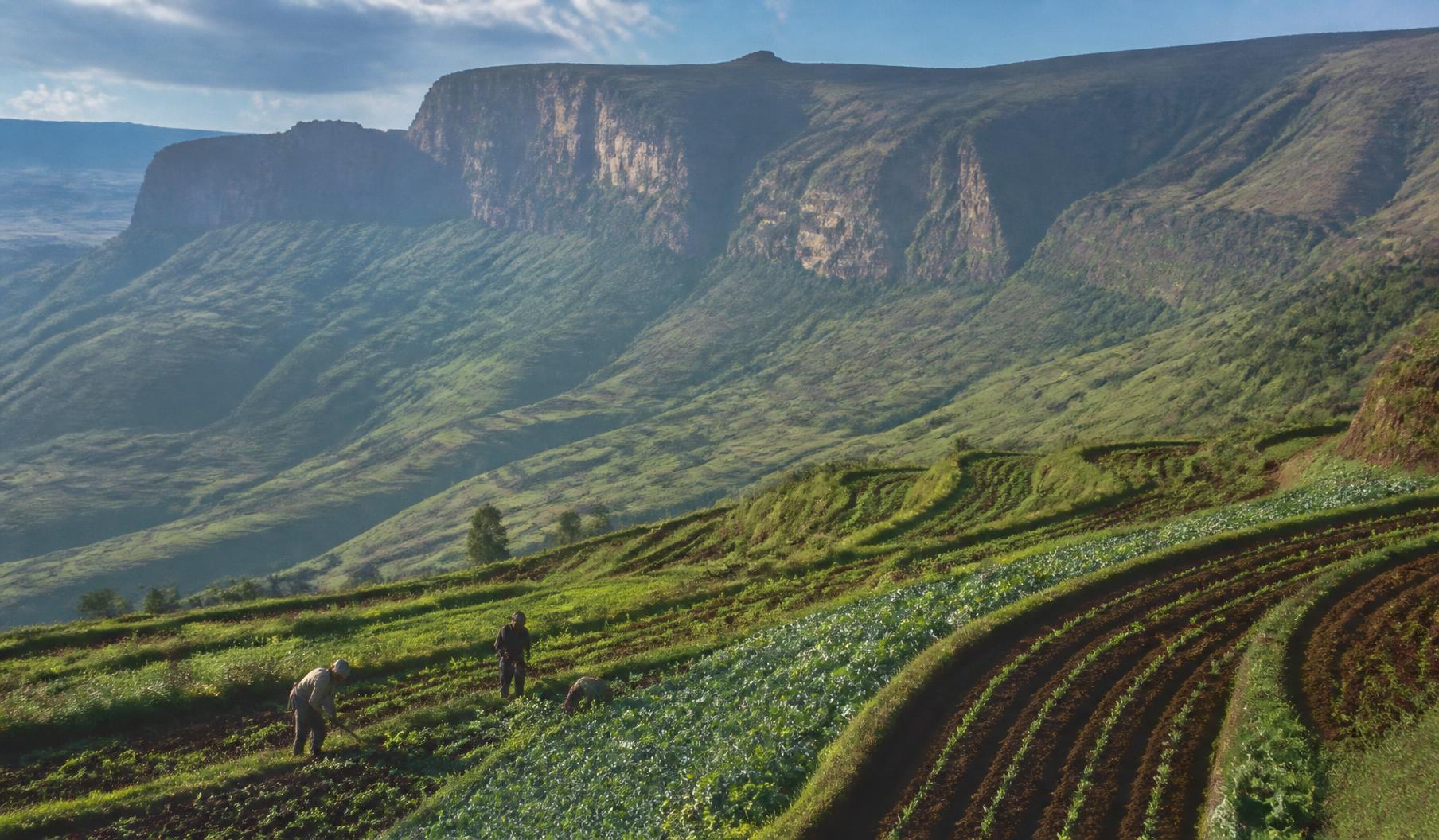
Kericho sits on the western shoulder of the Rift Valley, high enough that the afternoon arrives with cloud. The landscape reads as one continuous green surface, but it is a made thing—a century of planting laid over volcanic ground.
01
The conditions
Kericho lies roughly 1,800 to 2,200 metres above sea level, close to the equator, on deep well-drained volcanic soils. Rainfall is high and distributed across most of the year rather than concentrated into a single season.
The result is near-continuous flush: tea grows year-round rather than in a few defined harvests, which is unusual among major tea origins and central to Kenya's export scale.
Rain is the county's most reliable infrastructure.
02
A layered history
Commercial tea arrived in Kenya in the early twentieth century and expanded through colonial-era estates around Kericho and Nandi. After independence, smallholder cultivation grew rapidly alongside those estates.
Land, labour and ownership in this landscape carry a difficult history. An honest origin account holds that alongside the beauty of the place.
03
Why Kenya is Chapter One
Kericho offers what an Origin House looks for: a defined landscape, deep agricultural knowledge, and living research—including the purple cultivars developed in Kenya's own institutions.
The first origin is not a claim of exclusivity. It is a commitment to document one place properly before moving to the next.
Editorial note
This story draws on regional history and published research. It does not claim a named Rift & Root supplier relationship.
- Tea Research Institute of Kenya: highland growing conditions
- Kenya Tea Development Agency: regional production
- Published histories of tea cultivation in the Kenyan highlands