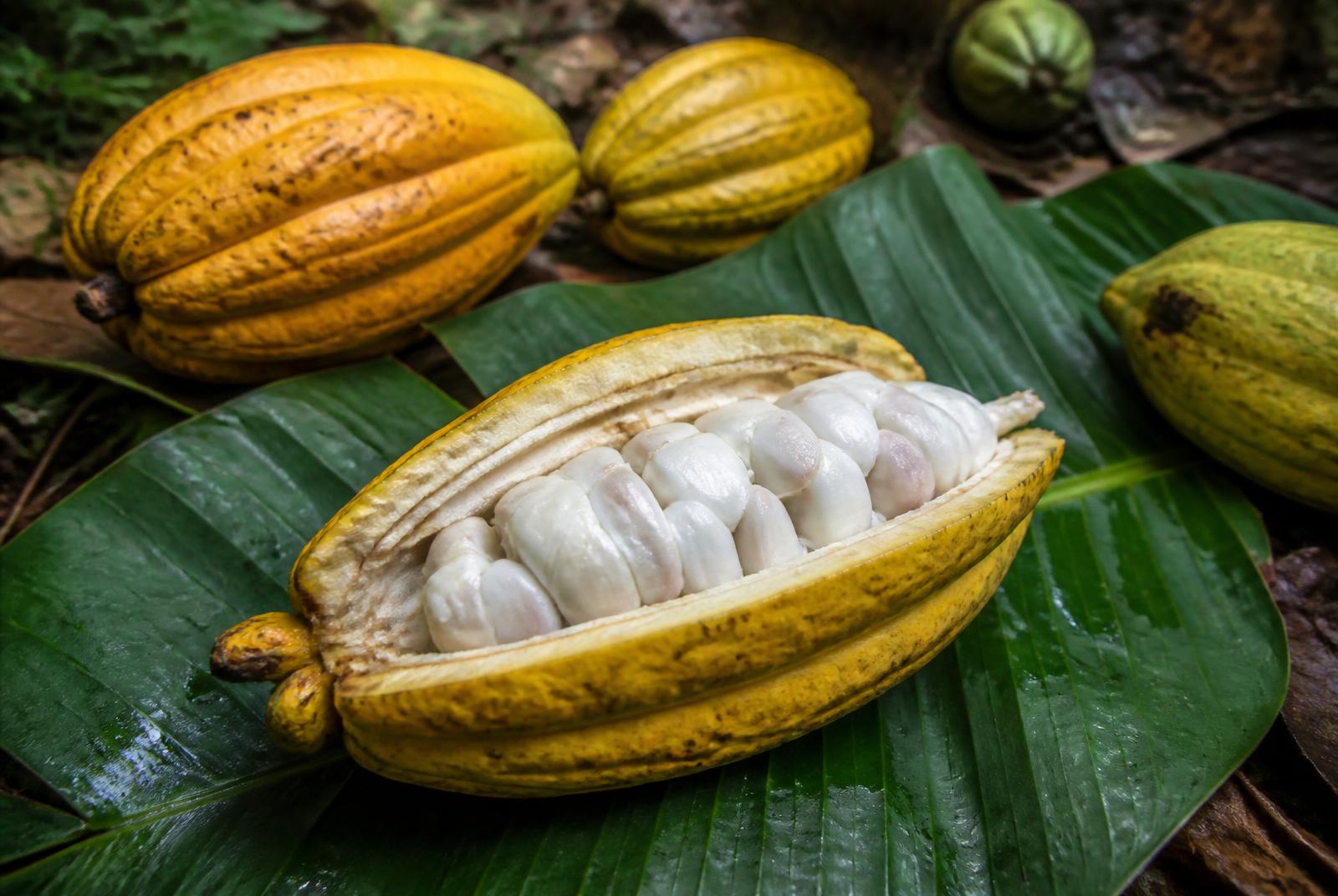
Break open a cacao pod and the familiar disappears. Inside the ridged shell is a bright white cluster, sweet with pulp, each seed still many careful decisions away from chocolate.
01
Beyond the founding story
Cacao is native to the Americas and reached the Gold Coast in the nineteenth century. Ghana’s popular account credits Tetteh Quarshie, a Ga blacksmith who returned from Fernando Po—today’s Bioko—with planting material in the 1870s.
The archive is more complicated. Basel Mission agriculturalists had experimented with cacao earlier, and competing claims were debated even during the colonial period. Quarshie remains an essential figure, but history rarely begins in a single hand.
The crop arrived from elsewhere. The knowledge that made it Ghanaian was built here.
02
A smallholder transformation
What followed is extraordinary. African farmers adopted, moved and cultivated cacao with remarkable speed. From negligible exports in the 1890s, the Gold Coast rose to become the world’s leading producer in little more than two decades.
That expansion was not a simple colonial plantation story. It relied heavily on farmers making decisions about land, labour, trees and trade—building a cocoa economy through their own networks.
03
Reading the pod
Cacao carries place through genetics, fermentation, drying and storage. The pod is only the beginning; post-harvest judgement shapes the aroma held inside every bean.
To value Ghanaian cacao is to look beyond commodity language and recognise the accumulated knowledge that turns a transplanted crop into a deeply rooted culture.
Editorial note
This story draws on regional history and published research. It does not claim a named Rift & Root supplier relationship.
- Swiss National Museum: the contested beginnings of cocoa in Ghana
- African Economic History Network: Ghana’s cocoa revolution
- Studies in the History of Gardens & Designed Landscapes: early cocoa introductions